Main Botetourt Page
the Botetourt story - Mendlesham - Sir John Botetourt, 2nd Lord Botetourt - Belchamp Walter - The Botetourt Years - Botetourt, Lord of Mendlesham - Maud de Botetourt (de Beauchamp) - de Beauchamp - Beatrice de Beauchamp = de Beauchamp and the relation to other families of the region.
This is one of the first pages on the Botetourts - this was when I was unaware that the chantry was not to John the first Baron Botetourt.
Michael Prestwich says that John Botetourt was a wealthy East Anglian landowner in his own right due to marriage.
Sir John Menteith of Ruskie and Knapdale (c. 1275 – c. 1329) was a Scottish nobleman during the Wars of Scottish Independence. He is known for his capture of Sir William Wallace in 1305 and later joined with King Robert the Bruce and received large land grants in Knapdale and Kintyre for his service.
Having signed up for Wikiwand I have more confirmatory information. I poked around on Wikiwand for 2nd lord Botetourt and the information was of less use.
I have multiple pages on the de Botetourts on this website:
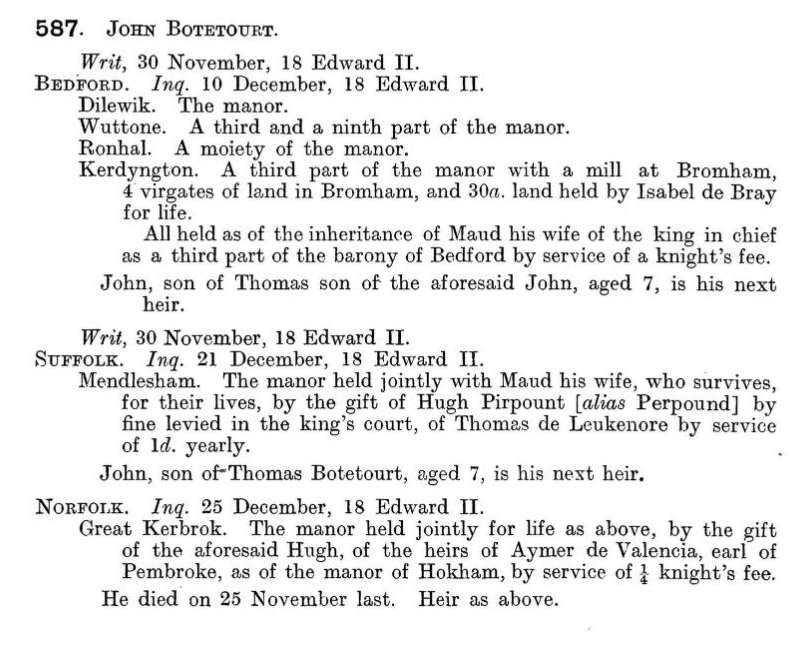
Having seen a GSC logging for my page on Botetourt and Mendlesham I see that the page is not well explained and would be confusing to the visitor. The IPM below shows a Mendlesham connection:
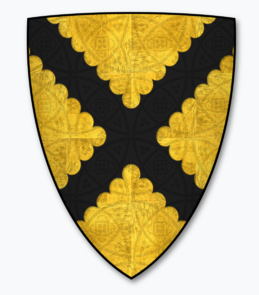
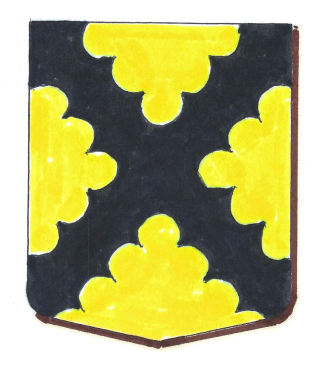
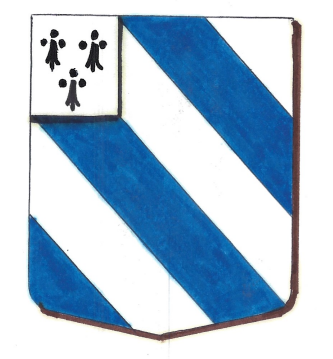
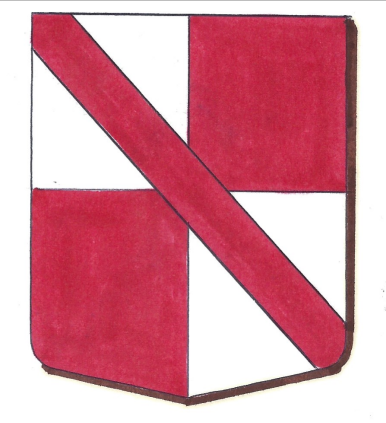
I mention the coats of arms on the memorial it would be good to have them in thirds on this page - Botetourt - FitzOtto and de Beauchamp
The thirds" above is being prototyped here - I have used the images taken from Peter Rushbrook - it is noted that the creats on the de Beauchamp and Fitz-Otho (Otes) are not the same and the file naming is incorrect.
There is a lot of information below from geni.com (links to their sources) including a dump from FMG. I need to
format these and highlight any relevance to Belchamp Walter and the Church of St. Mary's.
Having gone from virtually no information apart from the evidence of the remains of a chantry chapel in the
church of St. Mary Belchamp Walter which was demolished and the entrance defaced presumably in the English civil
war of the 1640's, I now have quite a bit of background to disseminate about Sir John and the possible reasons
for him having a chantry in the church.
The records are not totally clear, nothing new, and there is specultion on the heritage of Sir John or his father
with respect to being the illegitimate son of Edward (Longshanks).
Sir John de Botetourt - b. 1265 d. 1324
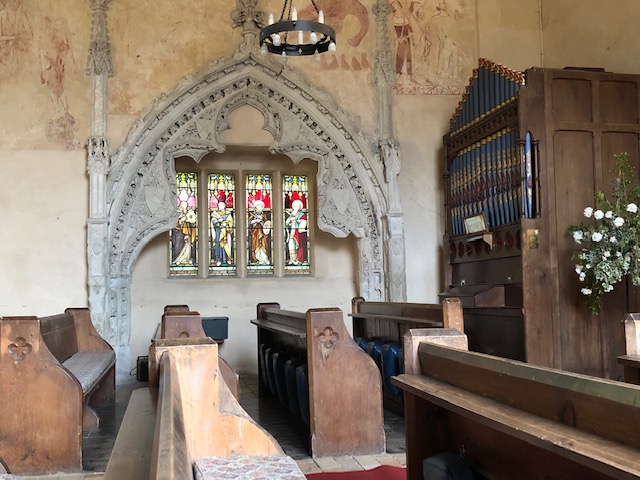
One of the most striking features of the Church of St. Mary's Belchamp Walter is the remains of the Chantry Chapel dedicated to Sir John Botetourt and his wife Maud (nee Fitz-Otho [Otes] - de Beauchamp).
The church guide says that the chantry is the tomb of Sir John de Botetourt who died in 1324. On further research it is evident that there was more than one Sir John and it is not clear to the author which is commemorated in St. Mary's. John Botetourt the elder had a son Thomas de Botetourt and there is a reference to Thomas being a resident of the village of Belchamp Walter.
The Botetourt family definately have connections to the village and the Advowsen of the church was held by them in the 14th century. The Botetourts also were the "owners" of various other manors so it is not clear if the Sir John even lived in the village.
The coats of arms for the families can be found decorating The Chantry Chapel in
St. Mary the Virgin Belchamp Walter.
Guy de Botetourt is the official father of Sir John.
Top
The account from Thomas Wright
"
In 1286, William de Montchensy died, holding this manor and other estates, of the inheritance of his wife Beatrix, deceased, formerly wife of Thomas Fitz-Otho.
His son William was his heir.
But this estate descended to Maud (Fitz-Otho), the last surviving daughter of Fitz-Otho, by the before-mentioned Beatrix; and this Maud conveyed it to her husband, Sir John de Botetourt, of Mendlesham, in Suffolk, to whom she was married in 1302.
They had four sons, Thomas, John, Otho, and Robert, and a daughter.
Sir John died in 1325, holding jointly with his wife this and other estates, which were entailed on the second son John, who, on his death,
in 1339 2 , to left his only son, Sir John, his successor 3.
"
This must have made Sir John a very rich and powerful man. The demesne lands at this time were probably quite extensive and likely to have been greater or equal to that when it was sold to John Raymond.
The following were footnotes from Thomas Wright's account. Originally I didn't copy and past them - possibly from an Inquistion -
See also
Public Record Office for more information on Inquistions Post Mortem
"
2.
At the time of his decease, he held this manor by the service of two knights' fees and a half ; of which John,
earl of Oxford, had at that time the ninth part of this rent."
Inquistion. 13 Edward the Third.
The concept of a "Knight's Fee" is that in medievil times land was granted to knights as recompense for their services to a patron, most likely a soveriegn. 2 and a half Knights Fees is a lot. However, this came with the downside is that you could be called to fight in a conflict that you may have no interest.
"
3. The demesne lands of this manor amounted to five hundred and ninety-three acres.
"
More research sources
What I have done here is to copy and paste research notes that I have found from other sources. I need to format some of
this to see if there is anything new.
In order to format this page to a new page layout I have commented out a lot of the research that
I found on the gemi.com and The Foundation for Medievil Geneology websites - this text needs to be disected.
There are a lot of website references and I may have not represented them correctly at the moment. I will have to come back to
this.
Britsh History On-Line says:
"
Monuments: In nave—in N. wall (see Plate, p. 20), (1) said to be to Sir John Boutetort, 1324 or 1325, and Maude
(Fitz-Otes) his wife,
arched recess probably forming canopy for former altar tomb and entrance to former chantry-chapel, moulded and two-centred arch,
cinquefoiled, sub-cusped and carved with foliage and flowers, points of main cusps carved with grotesques, and on main spandrels
four shields of arms alternately,
(a) a saltire engrailed, for Boutetort, and (b) bendy with a quarter, for Fitz-Otes;
crocketed and moulded label with carved finial, moulded responds carved with foliage; arch flanked by square panelled buttresses
with panelled, gabled and crocketed pinnacles, on buttresses numerous small shields of arms including Boutetort, Fitz-Otes,
Boutetort with a label of five points, Fitz-Otes impaling Boutetort, and quarterly a bend, for Beauchamp;
at back of arch,
moulded and carved springers of vaulted roof of former chapel, or canopy of tomb, springing from semi-circular vaulting
shafts with moulded capitals.
"
The Chantry
This was located on the North wall and was possible constructed at a similar time to the painting of the murals. The murals could also have been painted around the entrance.
Maud Botetourt
"
She was the daughter of Sir Thomas fitz Otes and Beatrice de Beauchamp [2,3] She married John de Botetourt, 1st Lord Botetourt, son of Edward I 'Longshanks', King of England, between 1 July 1285 and June 1292.1,5
She died after 28 May 1329. [3]
Note - the descent from Edward I has been supposedly disproven. See
Here - 🔗 - source geneajourney.com
(link removed - see below)
"
The link to https://www.geneajourney.com/ was removed as the website had
re-written their pages. Sadly, the site had been "improved". The disproving of the Botetourt parentage
was just another reference back to Douglas Richardson.
The marriage of Beatrice de Beauchamp to Thomas Fitz-Otto and their daughter Maud is also referenced in the text by The Bedfordshire Historical Record Society - 1912.
A third of the inheritance of the de Beauchamps transferred to the Fitz-Ottos.
From the Belchamp Otten/ Belchamp St Paul PC website
"
The church is of Norman origin, the Nave walls are certainly of that period, and the South Door indicates the
date to be
about the early or middle of the 12th Century. This doorway, for so small a church is a very good example of
the period.
It consists of two orders of columns, which are ornamented with the spiral device common to the period,
whilst the arches
springing from them have the ordinary zig-zag upon them.
All the original Norman windows have disappeared, or rather have
been removed to make way for the two-light decorated windows on the South side, and the three-light
decorated window on the
North side of the Nave; in two of which there are still fragments of the original painted glass.
In these decorated windows
it is thought we see the hand of the FitzOthos or of Sir John de Boutetort.
There is a modern two-light window at the West end.
"
Note the alternate spelling of Sir John de Boutetort and Fitz-Otho
geni.com
This needs to be formatted................. Currently commented out
I may have mixed the sources here - geni.com references fmg.ac and geni.com themselves - BOTH need to be disected.
fmg.ac
"JOHN de Botetourt ([1265]-25 Nov 1324). According to the Complete Peerage, the parentage of John de Botetourt is unknown.
A Hailes abbey chronicle names John Botetourt as illegitimate son of King Edward I. Michael Prestwich comments that "in general terms, the Hailes chronicle is a reliable source", but highlights that Botetourt´s name is "in a genealogical table" in the chronicle and "appears to be written over an erasure".
He concludes that "there is nothing in Botecourt´s career to suggest that he was an illegitimate son of the king" and that "in the absence of any corroborative evidence, it is difficult to credit the evidence of the genealogical table". Nevertheless, if the parentage as stated in the Hailes chronicle is incorrect, there must be some explanation for John Botetourt´s name being included, which is not obvious.
"
LORDS BOTETOURT - fmg.ac again
The primary sources which confirm the parentage and marriages of the members of this family have not yet been identified,
unless otherwise stated below.
I have a lot of research commented out in source........
Some of this needs to be formatted and the page re-indexed in case there are others making searches.
GUY Botetourt of Ellingham, Norfolk (-[1316])
I think this quote came from a geni.com profile, but these seem to be somewhat "fluid".
I have a page on Guy de Botetourt where I am attempting to expand some of the research that I collected
from geni.com ealier.
"
Married to ???????. The name of Guy’s wife is not known.
Guy & his wife had [one child]:
"
Background to this page
Having seen this page found by those making an Internet search I have decided to add
more context.
There are many references to Sir John de Botetourt being the illegitimate son of Edward I. There are many references that
say that this is not the case, however, the fact that Sir John had connections to the area that is now Belchamp Walter and
there is the remains of quite an elaborate tomb/chantry in the parish Church is an indication that he must have been quite an
influncial person in Englisb History.
The marriage of Sir John Botetourt to Maud/Matilda Fitz-Otho, he then of
Mendlesham, Suffolk and Fitz-Otes
of more local stock provided the connection to the Belchamp Walter area. The reference
www.geneajourney.com/botetrt.html needs
to be investigated more fully as it claims that the connection to Edward I (Longshanks) had been disproven.
I have started a new page on Guy de Botetourt - this will attempt to trace the
connection with the Duke of Normandy's family.
Much of the research was obtained from the geni.com website - however, a lot of
the references from geni come from other sources that have been uploaded by those using the service (I presume).
Thomas Wright says that
"the family of Botetourt came from Normandy with the Conqueror.
Thomas Wright also states that Sir John was made the Governor of St. Briavels Castle, Gloucestershire and
warden of the forest of Deane.
The Wikipedia page for St. Briavels Castle makes no mention of Sir John.
Johanna de Botetourt - de Belchamp
Married Sir Robert Swynbourne. She is described as co-heiress of
John de Botetourt, but which one?
The period of history is that of Edward II and the life of the de Botetourts could have been part of
the machinations of the time. Thomas de Botetourt seems to have been
living in Mary Hall, Belchamp Walter.
Guy de Beauchamp, 10th Earl of Warwick (c. 1272 – 12 August 1315) was involved in the capture and Piers Gaveston.