The subject of a wall painting in Belchamp Walter Church
Page accessed in October 2025 - Not sure if this was a consequence of a search but a good op to review the page.
The hidden links need to be added.
Anne Marshall - The Painted Church and ReedDesign need to be cited.
Each page on a mural or wall painting on this website needs to be "stand-alone". ie. it should tell its own story without the visitor have to click to another page. I am starting to wonder if a lot of Internet users actually know how to do this - they make a search, possibly using a voice command and AI and then just consume that result.
Page found by ChatGPT February 2026
Quotes:
"
The legends of self-wounding and the provision of blood may have arisen because of the impression a pelican sometimes
gives that it is stabbing itself with its bill. In reality, it often presses this onto its chest to fully empty the pouch.
Another possible derivation is the tendency of the bird to rest with its bill on its breast; the Dalmatian pelican has
a blood-red pouch in the early breeding season and this may have contributed to the myth.[4
"
"
The heraldic pelican also ended up as a pub name and image, though sometimes with the image of the ship Golden Hind.
Sir Francis Drake's famous ship was initially called Pelican, .....
"
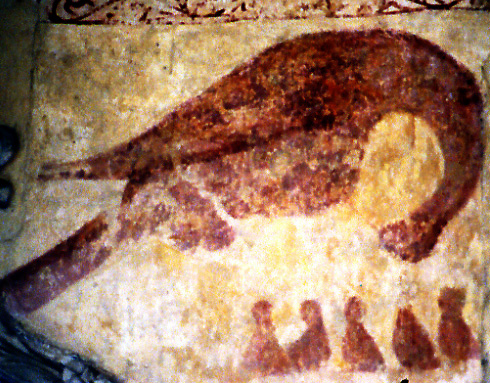
The Pelican in Her Piety
This mural is to be found on the North wall of St. Mary the Virgin, Belchamp Walter, Essex.
The example found at Belchamp Walter is a particularly good example of the Pelican and her Piety. Not only is it large, it is a very good representation of the meaning of the wall paintings in general. To a largely illiterate audience, the image has great meaning. Coupled with the other religious imagery and the moral poem of the The Living and Three Dead.
The Medieval wall paintings in Belchamp Walter are one of the special features of the parish Church.
Background to this painting
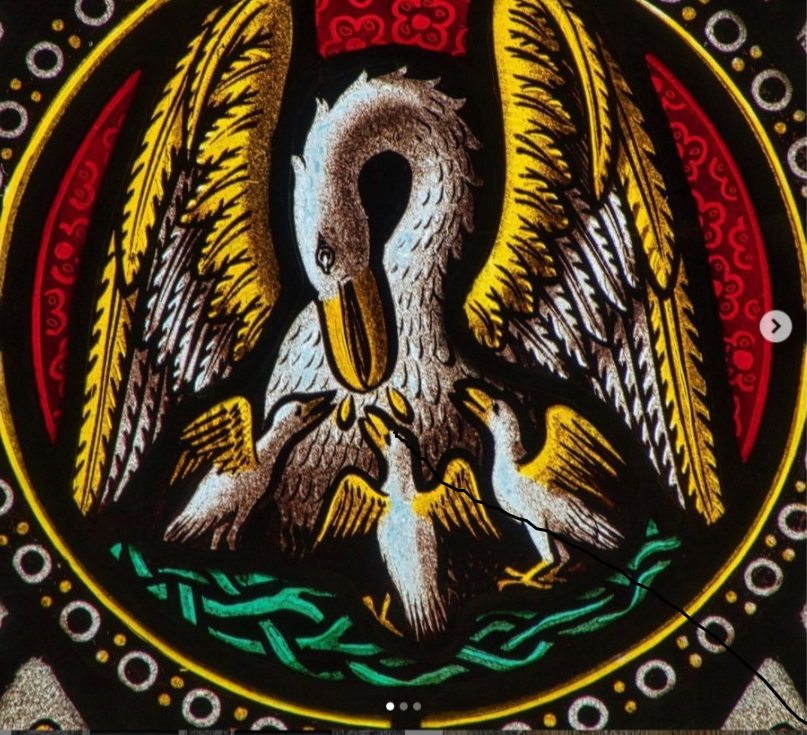
The Pelican and her young are a polular religious and medievil motif.
The legend preceeded Christianity and was adopted to represent to symbolize the life of Jesus Christ.
It is often featured in alter settings as the blood of the Pelican feeding her young in time of starvation symbolized the blood of Christ in the Eucharist.
Anne Marshall in her excellent book "The Painted Church" provides an explaination of this symbolism. The Pelican and her Piety is also used in many places to illustrate the sacrifice made by a mother to provide for her young.
Top
The motif is seen in Medievil artwork and often depicts charity.
Elizabeth I adopted the motif, portraying herself as the "mother of the Church of England".
The meaning of the symbol
"
The legends of self-wounding and the provision of blood may have arisen because of the impression a pelican sometimes
gives that it is stabbing itself with its bill. In reality, it often presses this onto its chest to fully empty the pouch.
Another possible derivation is the tendency of the bird to rest with its bill on its breast; the Dalmatian pelican has
a blood-red pouch in the early breeding season and this may have contributed to the myth.[4
"
"
The heraldic pelican also ended up as a pub name and image, though sometimes with the image of the ship Golden Hind.
Sir Francis Drake's famous ship was initially called Pelican, .....
"
Devonchurch
Something seen on a blog post (username as above)
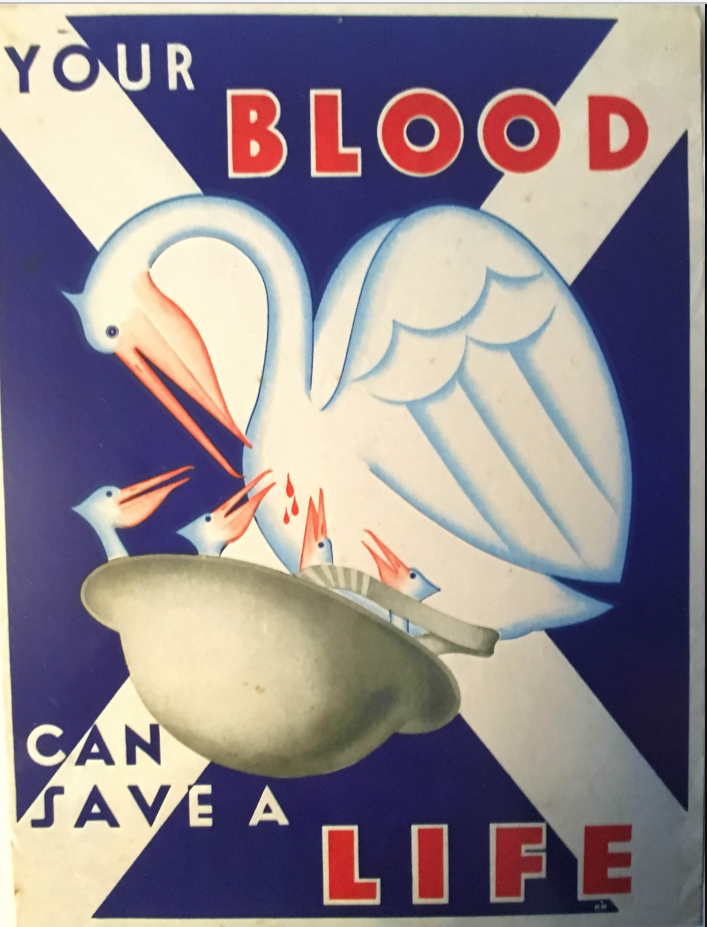
Blood Donation
Background to this page
Having seen this page found by those making an Internet search I have decided to add
a bit more context.