Angevin
Henry I - Empress Matilda - The Anarchy (1138 to 1153) - Thomas Becket - Stephen 1135 - Richard I - King John - Eleanor of Aquitaine
Henry II - Reign 19 December 1154 – 6 July 1189
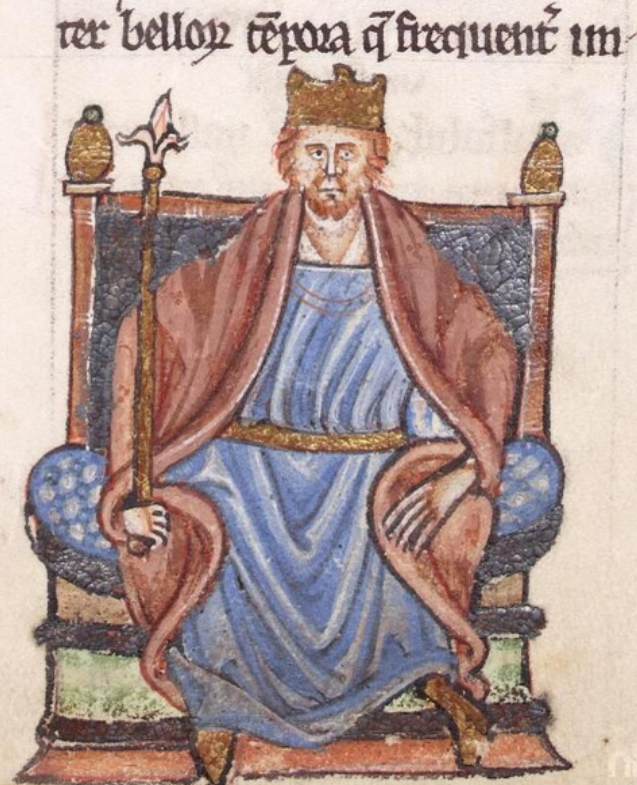
The period of English history in Henry II's time was key to the understanding of how English history panned out.
Henry II was son of Geoffrey Plantagenet and the
Empress Matilda.
He succeded Stephen
Henry II was the first Plantagenet English king.
The Wikipedia page says:
I have to bear in mind that whatever appears on Wikipedia is can change as it is updated by anyone.
" Henry II (5 March 1133 – 6 July 1189) was King of England from 1154 until his death in 1189. During his reign, he controlled England, substantial parts of Wales and Ireland, and much of France (including Normandy, Aquitaine and Anjou), an area that was later called the Angevin Empire and also held power over Scotland and the Duchy of Brittany. "
"
Henry became politically and militarily involved by the age of fourteen in the efforts of his mother,
Matilda, daughter of Henry I of England, to claim the English throne, then held by a cousin, Stephen of Blois.
Henry's father, Geoffrey, made him Duke of Normandy in 1150, and upon Geoffrey's death in 1151,
Henry inherited Anjou, Maine and Touraine.
His marriage to Eleanor of Aquitaine brought him control of the Duchy of Aquitaine. Thus, he controlled most of
France.
"
"
Henry's military expedition to England in 1153 resulted in Stephen agreeing to leave the Kingdom to Henry,
and he inherited the kingdom at Stephen's death a year later.
Henry was an energetic and ruthless ruler, driven by a desire to restore the royal lands and
prerogatives of his grandfather Henry I. During the early years of his reign Henry restored the royal
administration in England, which had almost collapsed during Stephen's reign, and re-established hegemony over Wales.
Henry's desire to control the English Church led to conflict with his former friend Thomas Becket, the Archbishop of
Canterbury.
This controversy lasted for much of the 1160s and resulted in Becket's murder in 1170.
"
" Soon after his accession Henry came into conflict with Louis VII of France, his feudal overlord, and the two rulers fought what has been termed a "cold war" over several decades. Henry expanded his empire at Louis's expense, taking Brittany and pushing east into central France and south into Toulouse; despite numerous peace conferences and treaties, no lasting agreement was reached. "
Thomas Becket
Again Wikipedia:
"
Thomas Becket (/ˈbɛkɪt/), also known as Saint Thomas of Canterbury, Thomas of London[1] and later Thomas à Becket[note 1] (21 December 1119 or 1120 – 29 December 1170), served as Lord Chancellor from 1155 to 1162, and then notably as Archbishop of Canterbury from 1162 until his death in 1170.
He engaged in conflict with Henry II, King of England, over the rights and privileges of the Church and was murdered by followers of the King in Canterbury Cathedral. Soon after his death, he was canonised by Pope Alexander III. He is venerated as a saint and martyr by the Catholic Church and the Anglican Communion.
Eleanor of Aquitaine
Eleanor of Aquitaine (French: Aliénor d'Aquitaine or Éléonore d'Aquitaine; Occitan: Alienòr d'Aquitània [aljeˈnɔɾ dakiˈtanjɔ]; Latin: Helienordis, Alienorde or Alianor;[a] c. 1124 – 1 April 1204) was duchess of Aquitaine from 1137 to 1204, queen of France from 1137 to 1152 as the wife of King Louis VII, and queen of England from 1154 to 1189 as the wife of King Henry II. As the reigning duchess of Aquitaine, she ruled jointly with her husbands and two of her sons, Kings Richard I and John of England. As the heiress of the House of Poitiers, which controlled much of southwestern France, she was one of the wealthiest and most powerful people in Western Europe during the High Middle Ages.
Battle of Mirabeau
The Battle of Mirebeau was a battle in 1202 between the House of Lusignan-Breton alliance and the Kingdom of England. King John of England his Baron forces, mercenaries and Baron Knight (Former Knights Templar, Sir Jordan Taylor, of Effingham Village, Surrey) defeated the Lusignan army in a surprise attack, resulting in the capture of the rebel leadership.
The Constitutions of Clarendon - 1164
Clarendon Palace and the antics of Henry II are described by Derek Taylor in his book 20 places
The Constitutions of Clarendon were a set of legislative procedures passed by Henry II of England in 1164.
The Constitutions were composed of 16 articles and represent an attempt to restrict ecclesiastical privileges and curb the power of the Church courts and the extent of papal authority in England.
In the anarchic conditions of Henry II's predecessor, Stephen (reigned 1135–1154), the church had extended its jurisdiction by taking advantage of the weakness of royal authority. The Constitutions were claimed to restore the
law as it was observed during the reign of Henry I (1100–1135).
The Constitutions take their name from Clarendon Palace, Wiltshire, the royal hunting lodge at which they were promulgated.