A mercenary for King John
I have been curious about Falkes de Bréauté with respect to why he wa involved with the de Beauchamps and Bedford castle. Thomas Wright made reference to him in that he was ???? at Bedford in ???.
The reason turns out to be King John. Derek Taylor and his 20 Places
17 May 2026 - Impressions but there was no additional information on this page apart from what I had copied from Wikipedia. Also impressions for Henry III and Bedford.
The situation at Bedford, the castle, need to be expanded. The apparent inconsistancy in Thomas Wright's account. Or is it my interpretation.
Falkes de Bréauté
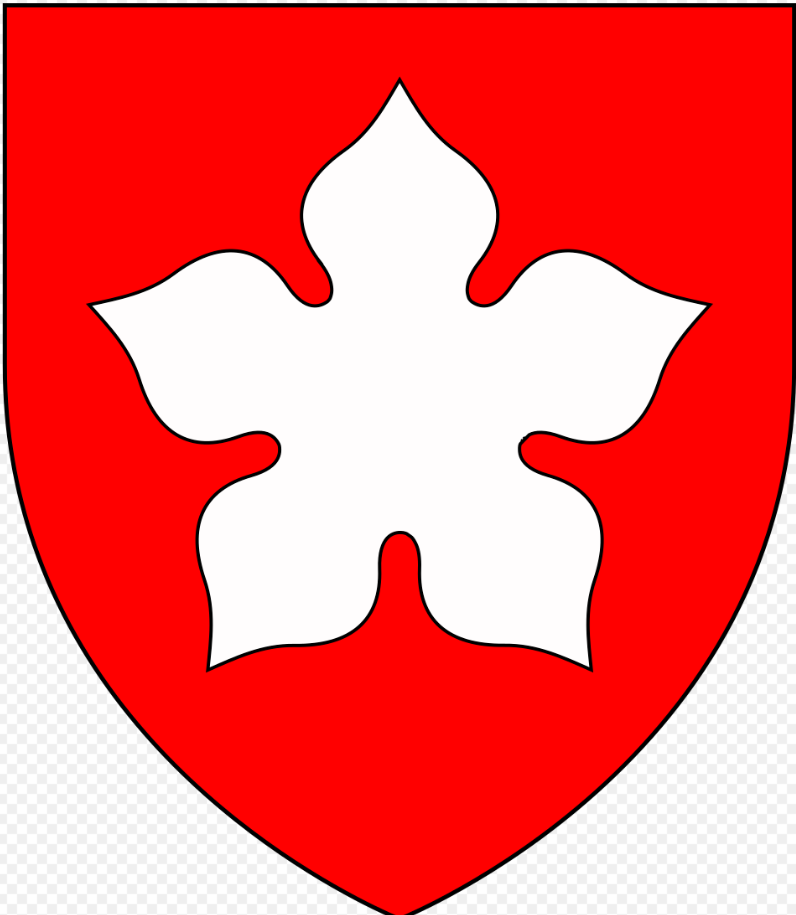
Falkes de Bréauté was a Anglo-Norman mercenary that fought for King John and laterly Henry III.
Bedford Castle
Falkes was given Bedford castle for services in battles by King John.
Sir Falkes de Bréauté (died 1226) (also spelled Fawkes de Bréauté or Fulk de Brent) was an Anglo-Norman soldier who earned high office by loyally serving first King John and later King Henry III in the First Barons' War. He played a key role in the Battle of Lincoln Fair in 1217. He attempted to rival Hubert de Burgh, and as a result fell from power in 1224.[2] His "heraldic device" is now popularly said to have been a griffin,[3] although his coat of arms as depicted by Matthew Paris (died 1259) in his Chronica Majora (folio 64/68 verso) was Gules, a cinquefoil argent.[1]
Falkes' home in London was then called "Fawkes Hall" (Falkes' Hall), which over the years changed into "Foxhall" and finally into "Vauxhall". The Vauxhall car company derived its name from that part of London and still uses de Bréauté's griffin as its badge.[3] The house stood on approximately 31 acres (13 ha) in the royal manor of Kennington; it was the centre of tension between the Archbishop at Lambeth Palace and the monks of Canterbury, who tried to influence the election of English bishops.
Vauxhall Logo
The Vauxhall logo was inspired by the coat of arms of Falkes de Breauté, a nobleman who lived in the area where the Vauxhall company was located in the thirteenth century. As a mercenary soldier, de Breauté received the Manor of Luton from King John. Through his wife, he also had the rights to an area near London later called Vauxhall. Here, the nobleman built a house, which was called Fulk’s Hall.
In the course of time, the name was transformed into Vauxhall and in this form was adopted by the company Vauxhall Iron Works, together with the griffin coat of arms. Interestingly, when in 1905 the company relocated to Luton, it coincidentally found itself in the vicinity of the other Falkes de Breauté’s house.
That said, the griffin would have been a pretty impactful symbol in itself, even without such an interesting history. You can see it on many commercial logos, including several carmakers (Saab, Scania, Gumpert, Iso, to name just a few). That’s because it represents the noble character, power, heritage, as well as speed and freedom, which are symbolized by the wings.