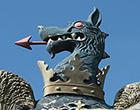
The dragon on the Belchamp Walter Millenium sign
The beast seen on the gateposts to Belchamp Hall is most probably a dragon and not as commonly thought a griffin.
A griffin is mythical animal with the head of an Eagle and the body of a lion. It has the wings of an eagle.
Access from ChatGPT bot 16 Sep 2025
I make reference to Griffin Farming but I am not sure of what the status of that name is. Not wanting to upset anyone in the village and all!
I need to expand the theory on village sign.
The Griffin Motif
The mythical beast seen on the village sign of Belchamp Walter is genrally referred to a a "griffin". It is more like that of a Wyvern. The symbol and depiction can be seen not only on the village sign but on the gate posts of Belchamp Hall and in theChurch. It was also used as a symbol for Griffin Farming. The Griffin Logo can also be seen on Vauxhall cars and trucks
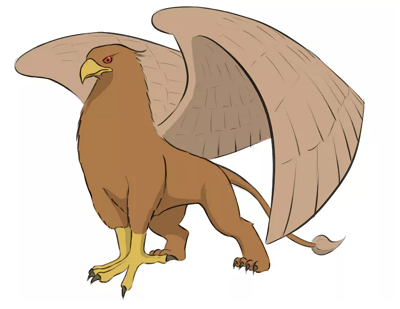
The original question I had was whether the motif on the Village Sign is a dragon or a griffin. A griffin
is the combination of the head of an eagle and and the body of a lion, it would have a beak.
A Wyvern
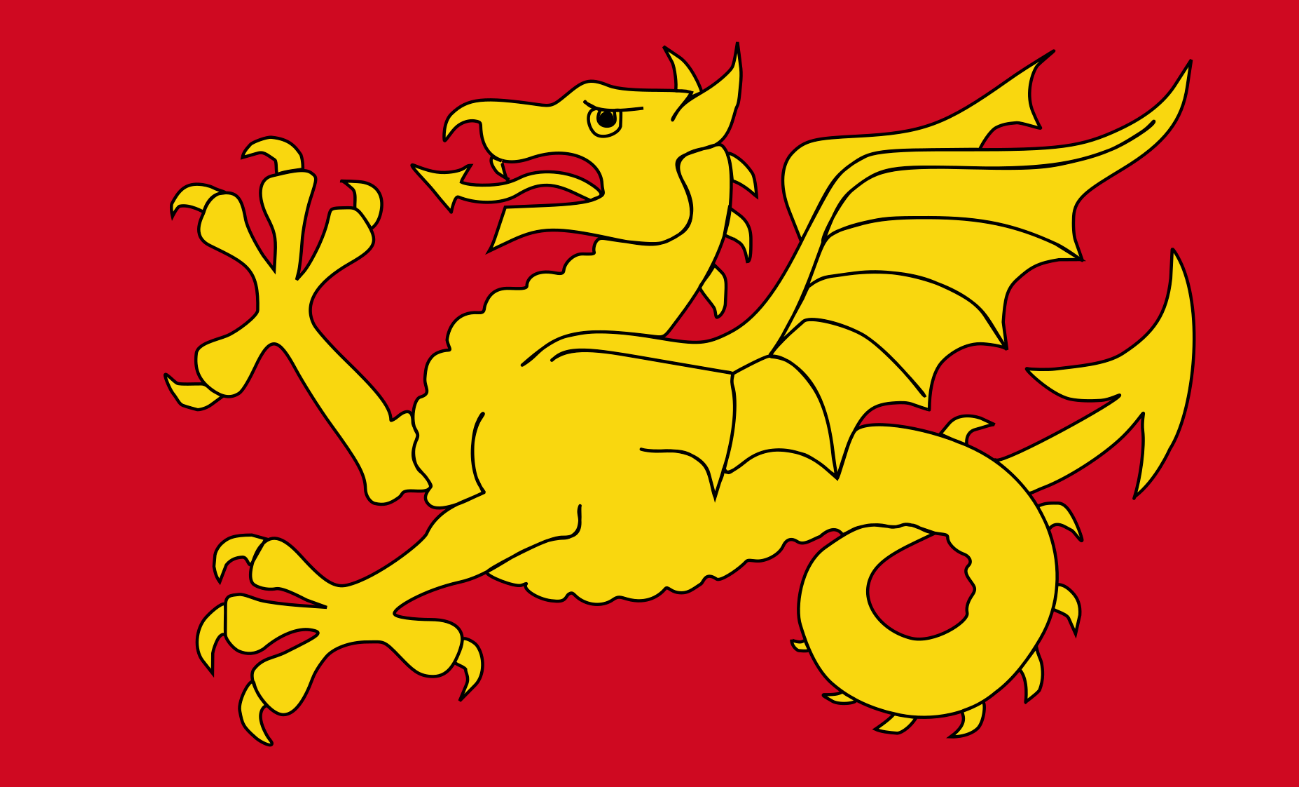
The creast below shows an interesting combination which is not explained anywhere that I can find. I do
have a theory about this.
The stained glass in St.Mary's
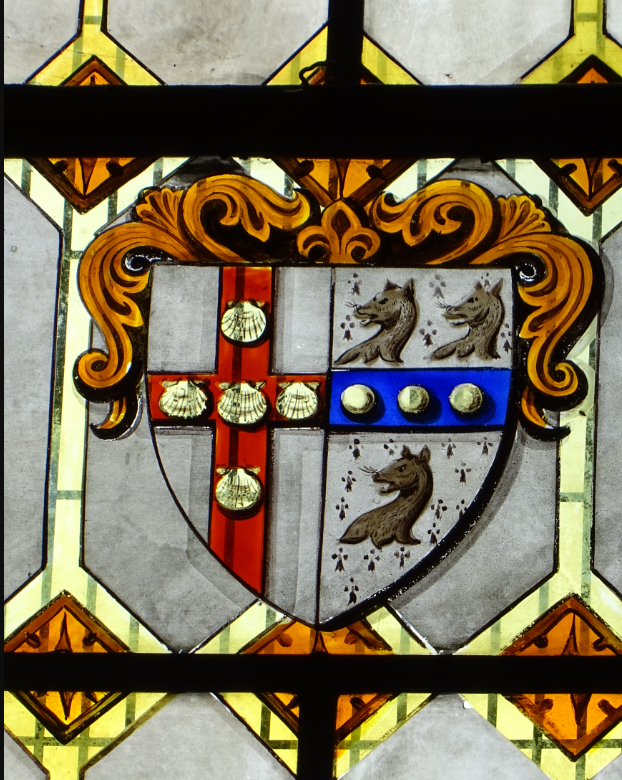
Above is a detail of a crest taken from a stained glass window in St. Mary
the Virgin, Belchamp Walter.
Top
The Heraldic Symbols for erimine fur

Interpretation of the coats of arms - in the Chancel of St.Mary's
There are a number of family crests (coats of arms) that a depicted in the Chancel at St. Mary's Belchamp Walter. The interpretation of the Griffin Motif and whether it is really a dragons head that is on both the gateposts, the facade and the village millenium sign.
The Clarendon/Villiers and the Tyrell crests are other coats of arms that I theories.
My theory is that the stained glass panel was originally in the
Medieval Belchamp Hall. Although the stained glass is now in the Church and bears the inscription that it
was inserted by John Mayne St. Clere in the 1890's, the glass is possibly earlier. The Elizabethan manor house could have been occupied by a relative of the Tyrell family to whom the crest belongs.
Above is the Millenium Sign that was commissioned for the village for the 2000 celebrations.
The
motif of the Raymond Family was used in its design.
A Griffin
Vauxhall Logo
The Vauxhall logo was inspired by the coat of arms of Falkes de Breauté, a nobleman who lived in the area where the Vauxhall company was located in the thirteenth century. As a mercenary soldier, de Breauté received the Manor of Luton from King John. Through his wife, he also had the rights to an area near London later called Vauxhall. Here, the nobleman built a house, which was called Fulk’s Hall.
In the course of time, the name was transformed into Vauxhall and in this form was adopted by the company Vauxhall Iron Works, together with the griffin coat of arms. Interestingly, when in 1905 the company relocated to Luton, it coincidentally found itself in the vicinity of the other Falkes de Breauté’s house.
That said, the griffin would have been a pretty impactful symbol in itself, even without such an interesting history. You can see it on many commercial logos, including several carmakers (Saab, Scania, Gumpert, Iso, to name just a few). That’s because it represents the noble character, power, heritage, as well as speed and freedom, which are symbolized by the wings.

The trade signs of Essex - 1887
There are also in Essex three examples of the sign of the GRIFFIN, situated respectively at Great Canfield, Halstead, and Danbury.
The GRIFFIN at Danbury, an ancient and well-known inn, is mentioned in the Chelmsford Chronicle on May 9, 1788. It is also several times prominently alluded to (ii. p. 174, iii. pp. 130 and 144, and iv. p. 66) in Mr. Joseph Strutt's Essex and Herts Romance of Queenhoo Hall, published in 1808.
Although in former ages people firmly believed in the existence of griffins, the animal has never yet been seen except in Heraldry.
Consequently it is only natural to assign the origin of its use as a sign to that art; but griffins appear upon the escutcheons of so many families that it is now quite impossible to say in whose honour it made its first appearance upon the sign-board