Belchamp Walter - early history
24 June 2026 - Listening to a World Service program about Jerusalem prompted me to lookup when the Roamn Emporer Hadrian came to England and subsequently when was the Gestingthorpe Roman villa built.
The settlement around GESTINGTHORPE ROMAN VILLA was occupied throughout most of this time. An early 'villa type' building appears to have been destroyed by fire and a new villa was built around AD 175-200. The Braintree/Long Melford section of a ROMAN ROAD almost certainly passed nearby.
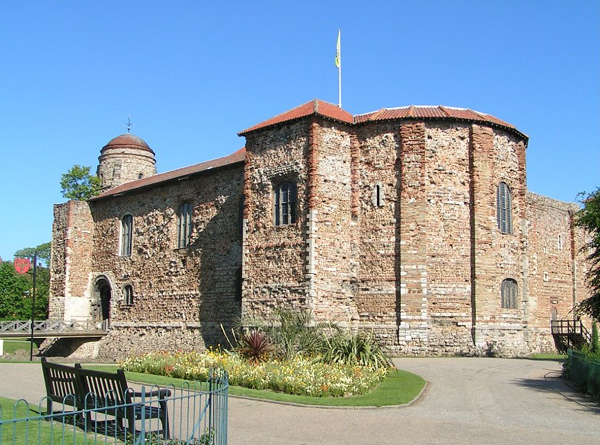
Camulodunum, the Colonia Victricensis (now Colchester)
Colchester
The Mysteries of Gestingthorpe Roman villa was a presentation made by Ashley Cooper to the Sudbury History Society.
The River Stour Festival and the Dedham Vale AONB (Area od Natural Beauty)
March 2026: Visits to pages that seem to have Ashley Cooper's name on them.
The Romans in Essex
The village of Belchamp Walter is close to the
Gestingthorpe Roman Villa.
Top
Gestingthorpe History Group has a museum at Hill Farm, which is close to the acheological site of the Roman villa.
Roman artifacts were uneathed by farming equipment and a full-scale dig was performed on the site.
The chairman of the Gestingthorpe History Group also is president of The Foxearth and District Local History Society.
Hadrian
The Roman Emporer Hadrian only spent 3 (12) years in England and that was only so that he could check up on what his Empire was up to. This was in the years of AD 122 when he had the famous wall built. In AD 119 Quintus Pompeius Falco was sent by Hadrian to restore order in Britannia.
The Gestingthorpe Roman Villa is thought to have been buily around AD 175-200, this was way after Hadrian's time. It is thought that there was an earlier villa on the site that could have existed in Hadrian's time.
In AD 132-136 Hadrian was fighting in the second or third Jewish war in Judaea.
The conflict with the Jews made me enquire about what the relationship between Hadrian and the Christians was and what the Christians were doing at this time. I made an AI search and came up with:
During the reign of Hadrian (117-138 AD), Christians faced a complex and often tense environment. While Hadrian was admired for his intellectual pursuits and brilliance, he also showed apathetic ignorance towards Christianity, reflecting a cautious approach rather than outright persecution.
- Hadrian's policies were characterized by a mix of tolerance and hostility, allowing local authorities to act against Christians based on local political dynamics.
- There were instances of martyrdom, such as Saint Eustace, who was martyred under Hadrian's reign for refusing to sacrifice to pagan gods.
- Hadrian's edicts aimed to regulate how Christians were treated, but local authorities could still impose severe penalties on them.
Overall, Hadrian's approach to Christianity was marked by legal ambiguity, where Christians were not actively hunted but still faced pressure and suspicion
In my research into how Christianity became the religion of England I find this analysis interesting.
In AD 597 Pope Gregory I sent Bishop Augistine to England to convert the pagans of Kent.