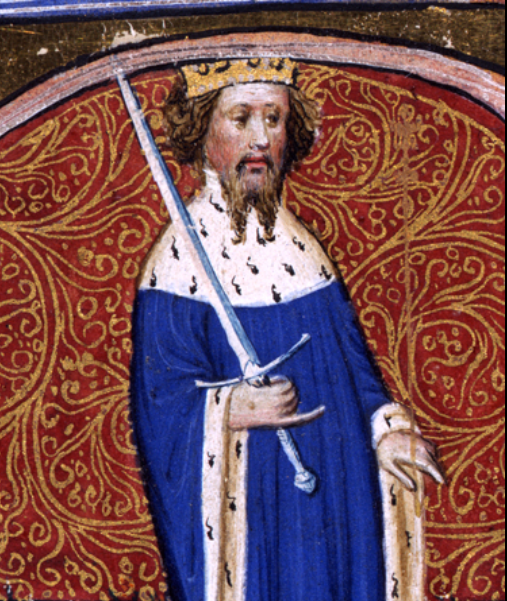
Henry son of John of Gaunt
Hundred Years War 1337-1453 - Bollingbroke 1399-1413
Richard II r. 1377-1399 - Henry V - Henry VI - John of Gaunt
Henry IV was on the throne when Robert Swynbourne was associated with Belchamp Walter.
As far as te reigning monarchs Henry IV was followed by Henry V and preceeded by Richard II.
The reasons for the War of the Roses needs to be addressed on this page as there is something that I don;t quite understand about the "Lancaster" bit.
The death of Richard II and the situation in Wales needs to be expanded.
The significance of the Shakespeare account and the role that Henry Percy (Hotspur) played in all this.
For a relatively short reign 1399-1413 Henry IV seemed to have a lot written about him (Shakespeare - not that he should be taken as the oracle of the history of England - re: Thomas Moore and Richard III).
February 2026 actually had a hit on this page. Not sure why as I have not really completed it and tied it to my general history, Henry IV can to the throne at the start? of the Swynbourne years. There is a lot of background that needs to be covered here.
Henry V 1413-1422 and Henry VI 1422-1461 (first reign) took Belchamp Walter into the Rolfe Green years.
Henry IV - reign 1399 to 1413
Henry Bolingbroke was the son of John of Gaunt, Duke of Lancaster (a son of King Edward III), and Blanche of Lancaster.
Henry was born at Bolingbroke Castle, in Lincolnshire - hence his name
In so far as the history of Belchamp Walter, Henry IV came to the throne 8 years after Sir Robert Swynbourne was possibly Lord of the Manor or at least the Advowsen for the parish was held by his family.
Sir Robert fought in the Hundred Years War as did Sir John de Botetourt II (possibly).
According to Wikipedia:
"
Henry IV (April 1367 – 20 March 1413), also known as Henry Bolingbroke, was King of England from 1399 to 1413. Henry's grandfather Edward III had begun the Hundred Years War by claiming the French throne in opposition to the House of Valois, a claim that Henry would continue during his reign. However, unlike his forebears, Henry was the first English ruler whose mother tongue was English rather than French, since the Norman Conquest, over three hundred years before.[4]
"
Top
The description of Henry IV from the RSC histories timeline
"
With Henry of the House of Lancaster taking power at the end of the last play, the first part of Henry IV, written around 1596-8, shows us the difficulties he faced once king. His reign was plagued by rebellion and unrest and Shakespeare gave the king the added complication of a wayward son, Prince Harry.
Part I shows Henry defending his crown and trying to wrest Harry away from the notorious Sir Falstaff, who knows the young prince as Hal. The play sees Harry stepping into his role as future king when the crown is forced into battle against the powerful Percy family. He is given a high command and kills the rebel Harry "Hotspur" Percy.
Despite this famous victory, the war is not yet over, with Part II continuing the story. There is more comedy from Falstaff and his friends, but Harry is now largely separate from them. When the king sickens and dies, Harry takes the throne as Henry V and rejects Falstaff and his former associates.
Battle of Shrewsbury
My interest here is in that the Percy family have been shown to be the ancestors of the Harris family and so have connection to Belchamp Walter.
Delving into the reasons for the War of the Roses and listening to a Radio 4 program on Henry IV plays, Hotspur and the Battle of Shrewsbury came up.
"
The Battle of Shrewsbury was fought on 21 July 1403, waged between an army led by the Lancastrian King Henry IV and a rebel army led by Henry "Harry Hotspur" Percy from Northumberland.