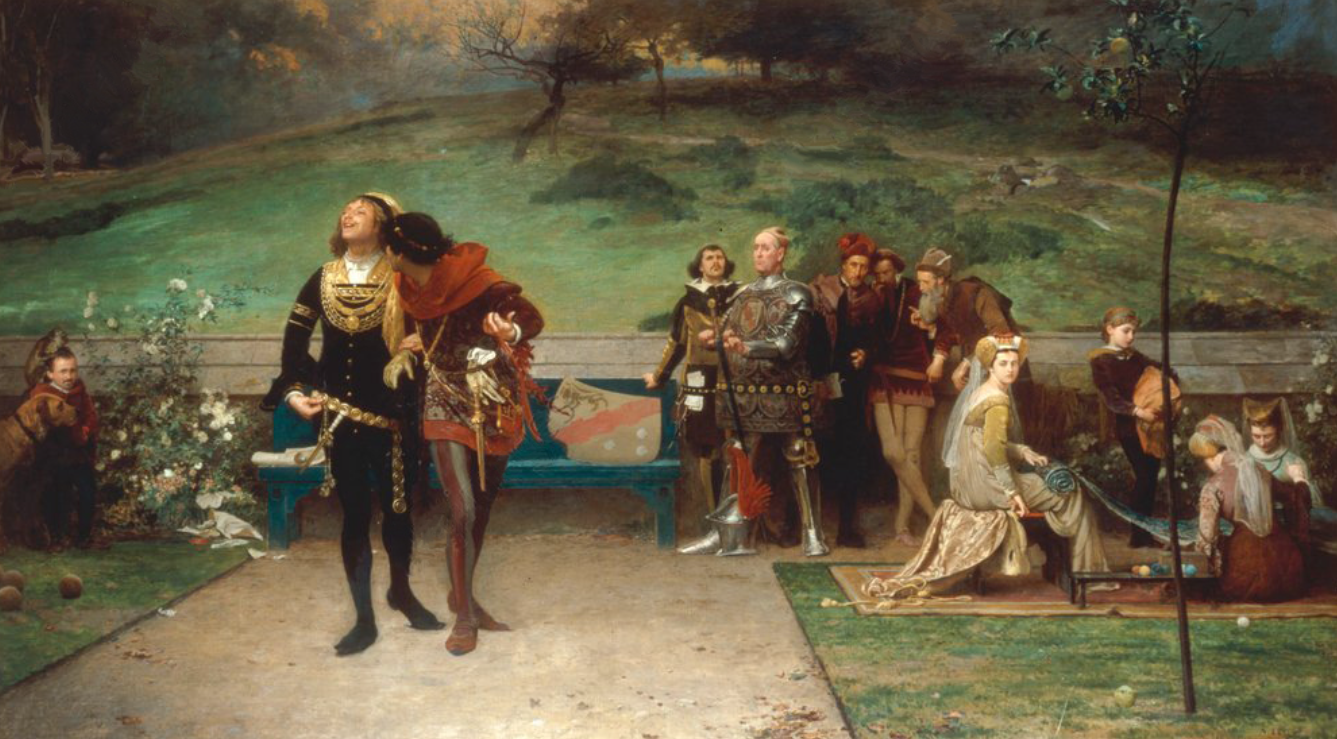
Edward II's favorite - 1st Earl of Cornwall
Edward I - Edward II - Piers Gaveston - The Life and Times of Sir John Botetourt - Warwick
Edward II and the Tactics of Kingship (Carolyn P. Schriber, Rhodes College) is a PDF for which I have a copy and a link to archive.org
Quotes
Piers Gaveston, 1st Earl of Cornwall (c. 1284 – 19 June 1312) was an English nobleman of Gascon origin, and the
favourite of Edward II of England.
At a young age, Gaveston made a good impression on King Edward I, who assigned him to the household of the
King's son, Edward of Caernarfon. The prince's partiality for Gaveston was so extravagant that Edward I sent
Gaveston into exile, but he was recalled a few months later, after the King's death led to the prince's accession
as Edward II. Edward bestowed the Earldom of Cornwall on Gaveston, and arranged for him to marry
Edward's niece Margaret de Clare, sister of the powerful Earl of Gloucester.
The Lords Ordainers and the Ordinances
The Ordinances of 1311 (The New Ordinances, Norman: Les noveles Ordenances) were a series of regulations imposed upon King Edward II by the peerage and clergy of the Kingdom of England to restrict the power of the English monarch.[a] The twenty-one signatories of the Ordinances are referred to as the Lords Ordainers, or simply the Ordainers.[b] English setbacks in the Scottish war, combined with perceived extortionate royal fiscal policies, set the background for the writing of the Ordinances in which the administrative prerogatives of the king were largely appropriated by a baronial council. The Ordinances reflect the Provisions of Oxford and the Provisions of Westminster from the late 1250s, but unlike the Provisions, the Ordinances featured a new concern with fiscal reform, specifically redirecting revenues from the king's household to the exchequer.
Just as instrumental to their conception were other issues, particularly discontent with the king's favourite, Piers Gaveston, whom the barons subsequently banished from the realm. Edward II accepted the Ordinances only under coercion, and a long struggle for their repeal ensued that did not end until Earl Thomas of Lancaster, the leader of the Ordainers, was executed in 1322.
Piers Gaveston
c.1284 – 19 June 1312
Piers Gaveston features in the history of Belchamp Walter due to the connection with Sir John de Botetourt and Edward II.
The anctics of Edward II and Piers Gaveston are a fasinating period of history from the 14th century. The nature of their reationship and the events that led to his deposition and death, the involvement of the knights from the local region.
The Ordinances of 1311
To control the activities of Edward II Ordinances were drawn so that he could not just do as he pleased. This
was a particular problem with his relationship with Piers Gaveston.
Top
Hereford and Pembroke
Hereford and Pembroke
are Humphrey de Bohun, 4th Earl of Hereford and Aymer de Valence, 2nd Earl of Pembroke.
Aymer de Valence - Wikipedia
2nd Earl of Pembroke (c. 1270 – 23 June 1324)
"
Aymer de Valence, 2nd Earl of Pembroke (c. 1270 – 23 June 1324) was an Anglo-French nobleman. Though
primarily active in England, he also had strong connections with the French royal house. One of the
wealthiest and most powerful men of his age, he was a central player in the conflicts between Edward II
of England and his nobility, particularly Thomas, 2nd Earl of Lancaster. Pembroke was one of the Lords
Ordainers appointed to restrict the power of Edward II and his favourite Piers Gaveston. His position
changed with the great insult he suffered when Gaveston, as a prisoner in his custody whom he had sworn
to protect, was removed and beheaded at the instigation of Lancaster. This led Pembroke into
close and lifelong cooperation with the king. Later in life, however, political circumstances combined
with financial difficulties would cause him problems, driving him away from the centre of power.
.
The capture and death of Piers Gaveston
Queen Isabella and Roger Mortimer
Edward II