March 2026: many impressions, possibly due to a misspelling of Bury St Edmaunds
7 July 2026 - Start of conversion for new directory structure. There are 8 photos on the server. #8 is the same as #4.
Need to have a local subdirectory to match that on the server so that I can run a local copy. (No problem with disk space on computer)
Page with new directory structure has been uploaded and seems to be OK. Test a few things out before doing any others as it is a little tricky getting all the file paths correct. For now I will leave the slideshow coding as it is as it works pretty well even though I can always make enhancements.
10 July 2026 - Slideshow scripts moved to crawler.js
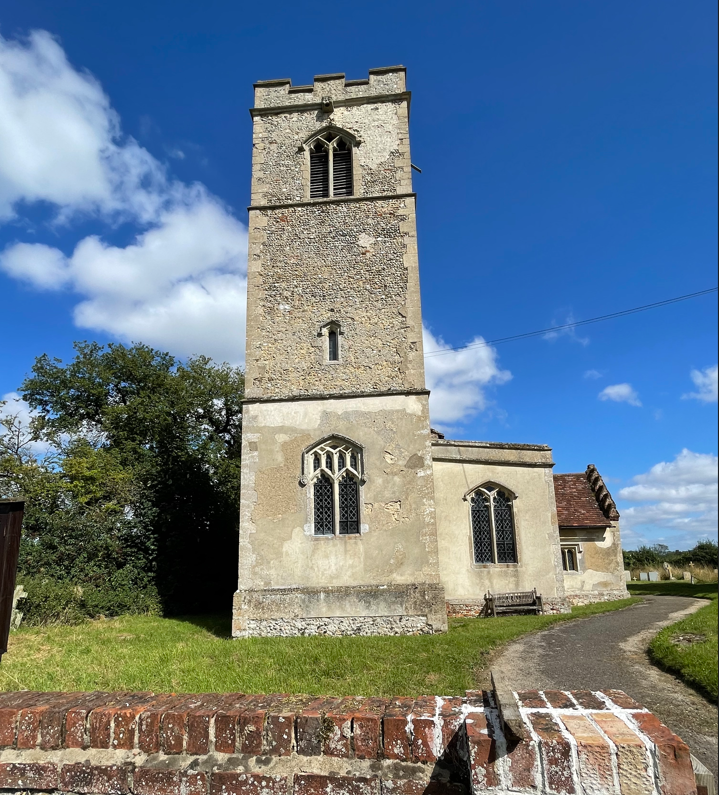
Rushbrooke St. Nicholas
Visited 17 August, 2023 on a Mid-Suffolk loop taking in Little W, Bradfield St George, Hessett - St Ethelbert, Beyton - All Saints, Rougham - St Mary's finishing with a picnic in the churchyard of Nowton church.
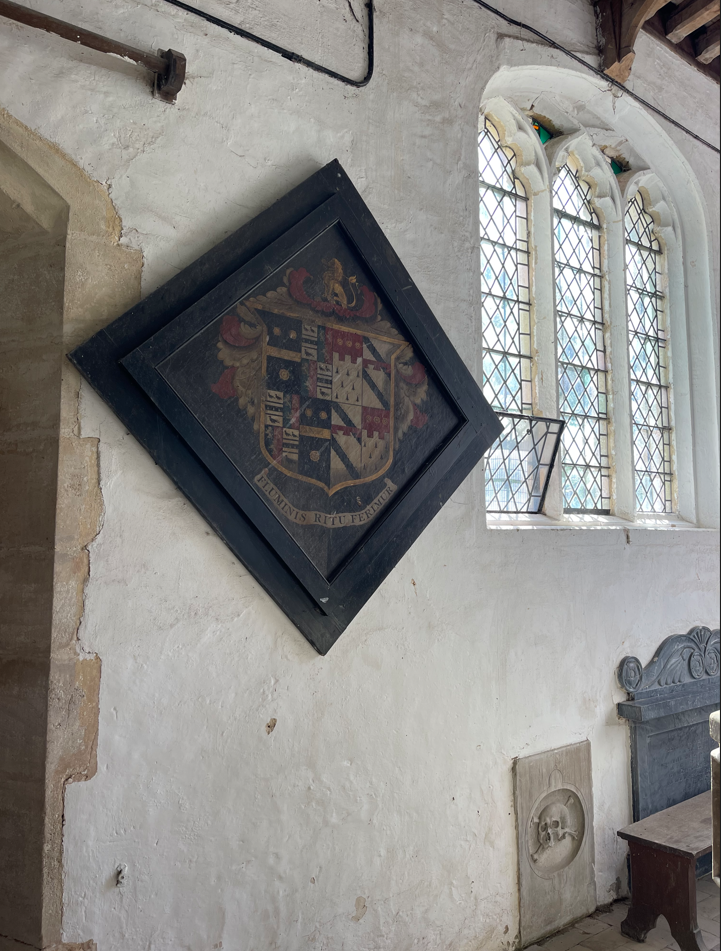
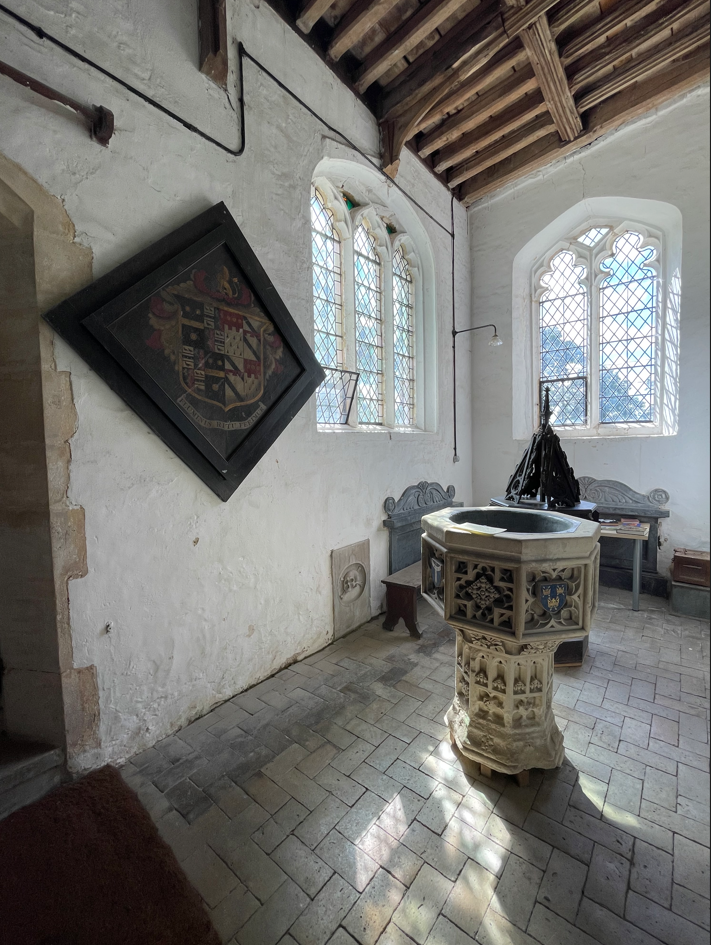
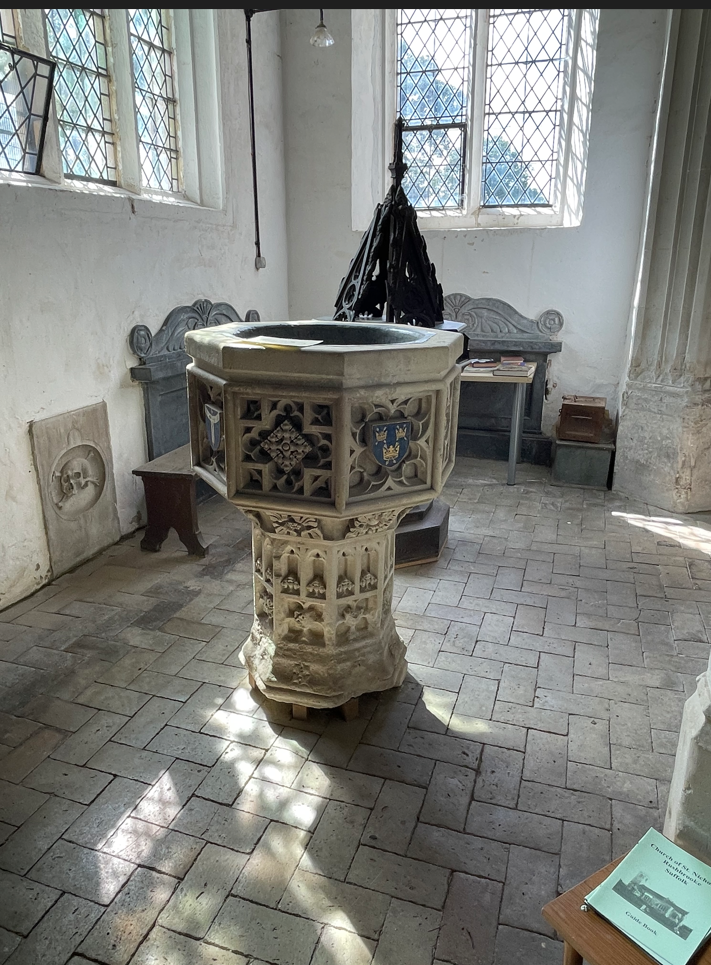
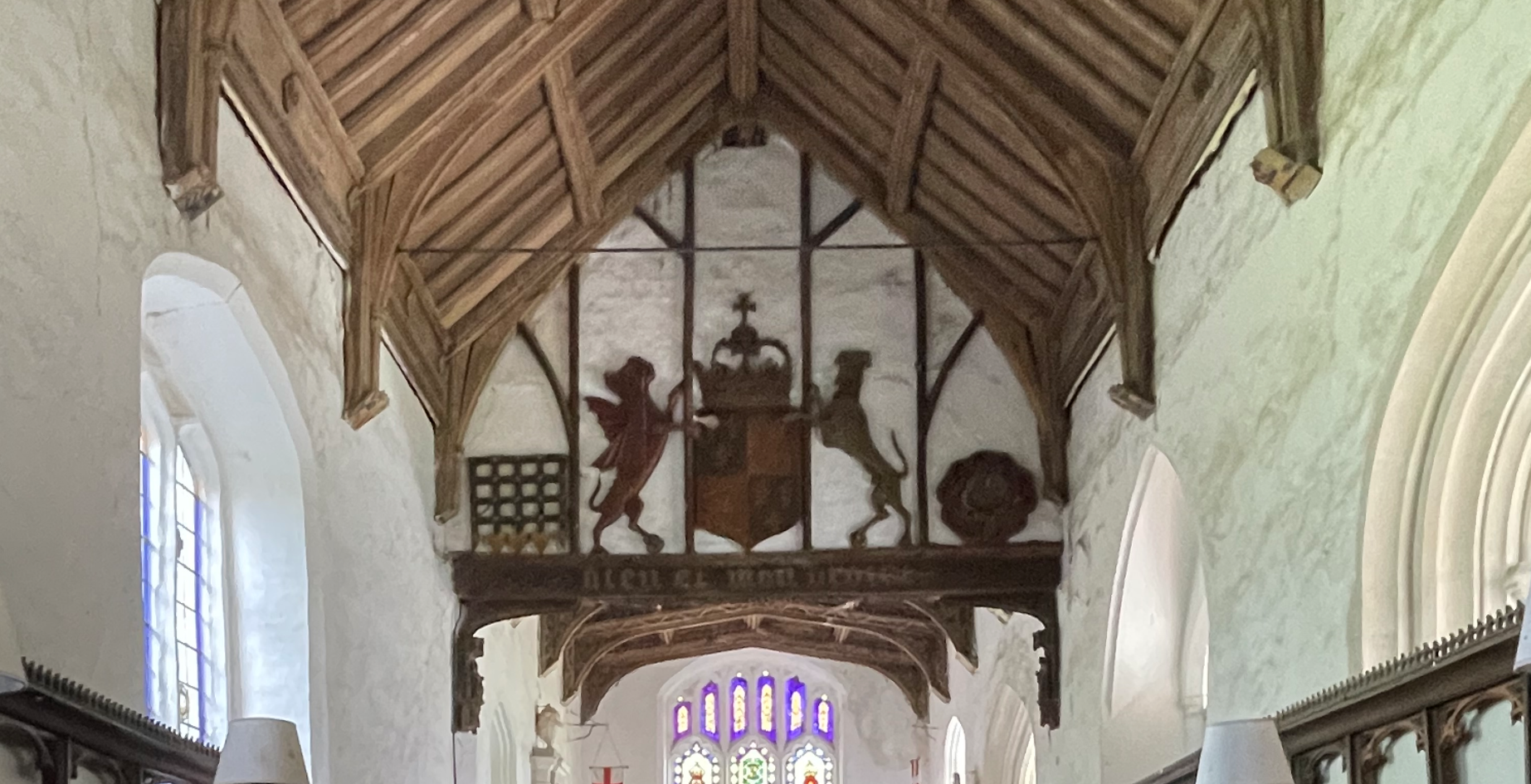
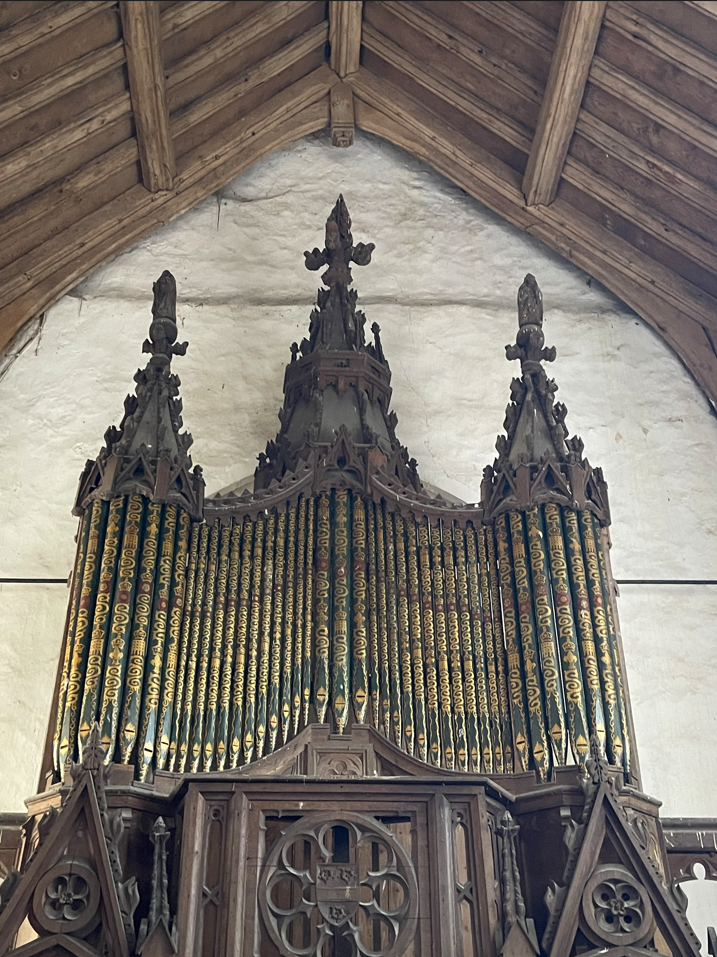
Rushbrooke church is possibly the most interesting church we have visited to date.
Top
The Wikipedia page says:
"
Rushbrooke is a village and former civil parish on the River Lark, 20 miles (32 km) north west of Ipswich,[1] now in the parish of Rushbrooke with Rougham, in the West Suffolk district, in the county of Suffolk, England. Until April 2019 Rushbrooke was in the St Edmundsbury district.
In 1961 the parish had a population of 58
"
The Jermyn Family
Searching the Manors of Suffolk I can find references to the Jermyn family.
See the Manors of Suffolk for details on Rushbrooke and family names associated with the village.
The information found in The Manors of Suffolk reveal details on the Jermym's of Rushbrooke but it would seem
that the section on the manor of Rushbrooke was in an edition that had been written but not published.
STANTON ALL SAINTS MANOR.
In 1305 the Abbot of St. Edmund granted this manor to Henry de Stanton for life in recompense for Newhall in Pakenham,
but it soon returned to the monastery, for we find the manor again vested in the Abbot in 1316, and with the
monastery it continued until the dissolution of the religious houses, when of course it passed to the Crown.
In 1539 it was granted by the Crown to Sir Thos. Jermyn of Rushbrook. Particulars for this grant will be found in the
Record Office.3
Sir Thomas Jermyn married first a daughter of Thomas Spring, of Lavenham, and 2ndly Anne daughter of Sir Robert Drruy, and died 8 Oct. 1552. An account of his funeral is given in the Diary of Henry Machyn, a citizen of London, 1550-1563, thus: " The xxj. day of October was the funeralle of a gentyll knyght, Ser Thomas Jarmyn, the best housekeper in the Contey of Suffoke, with ys standard and ys penone of armes, cot-armur, target, and sword, and skochyons ; and he kept a godly chapel of syngyng men, for the contrary have a gret loss of ys deth, as any contrey in England." He had been High Sheriff of Norfolk and Suffolk in 1541 and the goodly chapel of singing men were at Rushbrook Hall near Bury St. Edmunds where the Jermyn family had been seated from a very early period. He was the lineal ancestor of Henry Jermyn created Lord Jermyn of Edmundsbury by King Charles I. and Earl of St. Albans by Charles II. On the death of Sir Thomas Jermyn the manor passed to his eldest son by his first wife. Sir Ambrose Jermyn of Rushbrook knt. who died in 1577 and his eldest son John, who had married Margaret daughter of Edward Earl of Derby
7 - Henry Jermyn, 1st Earl of St Albans - https:// en.wikipedia.org/wiki/ Henry_Jermyn,_ 1st_Earl_of_St_Albans - could have been the father of Charles II as he is reported to have had a relationship with Henrietta Maria of France in the 1630s.